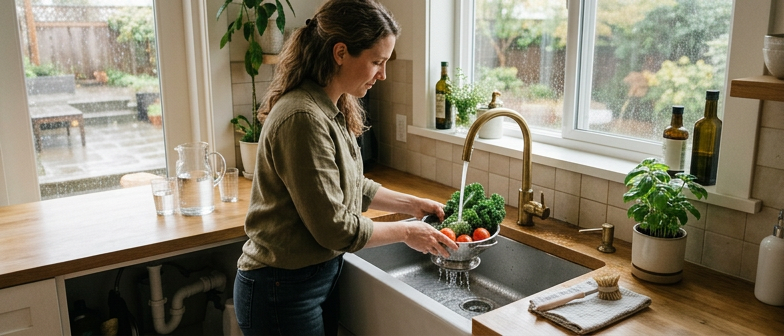
What the Household Water Cycle Really Means
People often imagine the water cycle only as oceans, clouds, and rain, but the same process is at work in every home. Household water cycle basics link your taps, pipes, garden soil, and nearby streams or treatment plants to evaporation, condensation, precipitation, and water flowing over land or underground. This kind of simple environmental learning shows that each glass of water and every shower is part of one continuous system that recycles the same limited supply of water on Earth.
In a home, the visible part of the cycle starts when treated water reaches your tap, is used for drinking, cooking, washing, or watering plants, and then leaves through drains into sewers or septic systems. From there it may go to treatment facilities, seep into the ground, or flow toward rivers, later evaporating and returning as rain or snow. Even activities like a hot shower add water vapor to indoor air, which then condenses on windows or walls. Seeing this loop inside and outside the house makes the household water cycle concrete and shows that everyday water use choices are part of a larger natural process, not something that begins and ends at the faucet.
Core Science of the Water Cycle
The water cycle is the natural system that keeps water moving around Earth, including the water that reaches a household tap. It begins with evaporation, when liquid water from oceans, lakes, puddles, and damp soil changes into water vapor as it warms. In everyday life you see a small version of this when a wet patio dries after a sunny morning or when clothes on a line lose their moisture. Plants also release water vapor through tiny openings in their leaves, a process called transpiration, which adds invisible moisture to the air and supports this continuous cycle.
Evaporation and condensation work together to move water between the surface and the atmosphere. As warm, moist air rises, it cools, and the water vapor condenses into tiny droplets or ice crystals that form clouds. You can see a simple form of condensation when steam from a shower collects as water on a bathroom mirror or when a cold glass makes moisture from the air bead on its surface. These everyday moments are small-scale versions of the same physics that allows clouds to grow and help explain basic rainwater science in familiar settings.
When enough condensed water gathers in clouds, gravity pulls it back to the surface as precipitation, such as rain, snow, or sleet. Rain runs off roofs into gutters, seeps into gardens, and trickles into local streams, where it joins rivers, wetlands, and groundwater supplies. Eventually, much of this water returns to larger bodies of water and can evaporate again, completing the loop that links everyday weather, simple environmental learning at home, and the wider water cycle.
| Water cycle stage | What happens | Home or neighborhood example | Learning focus |
|---|---|---|---|
| Evaporation | Liquid water warms and becomes vapor | Puddles or patios drying after sun | Noticing invisible moisture leaving surfaces |
| Transpiration | Plants release water vapor to air | Garden soil drying under leafy plants | Linking plant health to local humidity |
| Condensation | Water vapor cools into tiny droplets | Foggy bathroom mirror after a shower | Connecting cloud formation to everyday steam |
| Cloud formation | Droplets or ice crystals gather aloft | Darkening sky before a rain shower | Relating sky changes to upcoming weather |
| Precipitation | Condensed water falls back to ground | Rain running from roofs into gutters | Seeing how gravity returns water to land |
| Collection and runoff | Water gathers in soils and waterways | Street drains leading to nearby streams | Tracing how local flows rejoin the water cycle |
Evaporation, Condensation, and Clouds Explained Simply
Evaporation and condensation drive both the household water cycle and wider weather. When liquid water gains heat, its molecules move faster and some escape into the air as invisible vapour. You can see this in a simmering pot or a towel drying on a rack. Condensation is the reverse change: as warm, moist air cools, vapour slows down and clumps into tiny droplets. A foggy bathroom mirror or water on the outside of a cold drink are everyday examples that make this simple environmental learning easy to notice at home.
The same basic physics links your kitchen and bathroom to clouds and local weather. Warm air rising from sun‑heated ground or roofs carries moisture upward, then cools so vapour condenses on tiny particles, forming clouds of droplets or ice crystals. When enough droplets merge and become heavy, they fall as rain or other precipitation, showing clear weather and water links above your home.
From Cloud to Tap to Drain
The household water cycle begins high in the atmosphere, where water from oceans, lakes, soils, and plants evaporates into vapour, cools, and condenses into clouds. Weather patterns shape how these clouds release rain or snow, linking weather and water in a simple way. This precipitation feeds rivers, reservoirs, groundwater, snowpack, and glaciers, creating the local water sources that communities rely on for daily needs.
Once rain or melting snow reaches the ground, some runs off into streams and lakes, while some soaks in and refills underground aquifers. Water utilities draw from these natural sources and send the water through treatment plants, where it is filtered and disinfected so it is safe for drinking, cooking, and washing. From there it travels through buried pipes and pressure-controlled networks to taps, showers, and appliances at home, showing a basic, everyday view of how the household water cycle works.
When water leaves the tap, it enters drains and flows into sewers or septic systems. In most towns it is carried to a wastewater treatment plant, where solids and pollutants are removed before the cleaned water is released back into rivers, coastal waters, or the ground. From there it can evaporate again, join clouds, and re-enter the wider cycle. Seeing this round trip from cloud to tap to drain provides a simple way to understand rainwater science and how home use fits inside Earth’s ongoing water cycle.
Daily Water Use Awareness Around the Home
Paying attention to everyday habits is one of the simplest ways to understand basic household water use. Each time you turn on a tap, start the washing machine, run a bath, or water plants, treated water flows in from your local supply, is used, and then leaves through drains to rejoin the wider water system. Noticing which routines use the most water, such as long showers or running half-full dishwashers, shows how personal choices connect to local rivers, reservoirs, and groundwater that feed evaporation, cloud formation, and rain.
By becoming more aware of daily water use, you see that conservation is not only about saving money but also about easing pressure on shared water resources. A quick mental check before you use water, like asking whether you really need a full sink or if a timer could shorten a shower, links your home directly to the broader environment. This kind of awareness turns the household water cycle from an abstract idea into practical decisions that help keep water available and cleaner for people and nature.
Practical Ways to Use Less Water at Home
Using less water at home starts with simple daily awareness. Every shower, load of laundry, or time you run the tap is part of a household water cycle where treated water is delivered, used, and returned to local waterways for cleaning. Watching how long taps run, filling the sink for washing dishes, and only running full loads in the dishwasher or washing machine are small shifts that add up. This kind of daily water use awareness turns routine tasks into moments of simple environmental learning and shows that each litre saved reduces the energy and treatment needed to keep clean water available.
Scientific ideas behind the water cycle can guide practical home water conservation tips. Shorter hot showers, fixing dripping taps, and using efficient showerheads and toilets save both water and the energy needed to heat or move it. Checking for silent leaks in toilet tanks and watering gardens in the cooler parts of the day so less water is lost to evaporation are grounded in basic physics and climate science. These actions reflect an understanding that water stays within Earth’s system and must be pumped, filtered, and treated before returning to your home.
Connecting your home habits to the broader water cycle makes conservation feel more meaningful. Rain that evaporates, condenses into clouds, and falls on your roof or local reservoirs is the same resource that comes out of your kitchen tap, so wasting less helps keep this shared system under less pressure. When many households use water thoughtfully, it can support rivers and groundwater during dry periods and make existing supplies last longer. In this way, everyday choices quietly support natural water processes and the long-term reliability of local resources.
Q&A
-
What do people mean by the household water cycle?
It is the path water takes as it enters your home from local sources, is used at taps, toilets, and appliances, then flows through drains to sewers, treatment plants, or septic systems before returning to rivers, soil, or groundwater. -
How does understanding daily water use help at home?
Noticing when and where you use the most water makes it easier to cut waste, lower bills, and reduce pressure on local supplies that feed the wider natural water cycle. -
How do evaporation and condensation show up in everyday life?
You see evaporation when puddles or wet clothes dry, and condensation when a bathroom mirror fogs or droplets form on a cold glass, the same basic processes that build clouds. -
How is rainwater connected to the water from my tap?
Rain and snow refill rivers, lakes, and underground aquifers that utilities draw from, clean, and pipe to your home as drinking and washing water. -
What are simple ways to conserve water at home?
Take shorter showers, fix leaks, turn off taps while brushing teeth, water gardens in cooler hours, and run full loads in dishwashers and washing machines.