What Kitchen Composting Is and Why It Matters
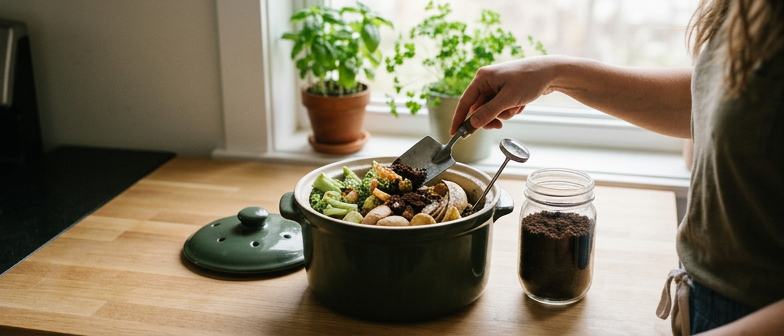
Kitchen composting is the practice of collecting food scraps like fruit peels, coffee grounds, and vegetable trimmings and letting them decompose into a soil-like material. It belongs to kitchen compost science basics: organic matter breaks down with the help of microbes, air, and moisture. By watching bacteria, fungi, and small invertebrates turn leftovers into dark, crumbly compost that can nourish soil, you see food waste not as rubbish but as part of a natural cycle of growth, decay, and renewal.
Because it turns ordinary routines into a small science experiment, kitchen composting is a practical form of beginner environmental study. Each time you add scraps and notice changes in smell, warmth, or texture, you are observing how living systems manage nutrients. This makes composting a realistic daily sustainability habit: it cuts food waste, shows the household decomposition process up close, and links what happens at the kitchen counter with what happens in soil, without needing special equipment or advanced training.
The Science Behind the Household Decomposition Process
Kitchen compost science is based on a simple idea: countless tiny organisms turn food scraps into a soil-like material. When you collect fruit peels, coffee grounds, and stale bread in a bin, you start a controlled household decomposition process instead of letting waste break down in a landfill. Bacteria, fungi, and other microbes feed on this discarded food as their energy source. As they eat, they release heat, carbon dioxide, and water vapor, which is why an active pile can feel warm or even steam on a cool day.
For food waste breakdown to stay steady instead of becoming smelly or slimy, microbes need the right conditions. They need oxygen, so loose material and occasional turning help air move through the compost. They also need moisture, but only enough to feel like a wrung-out sponge, which keeps them active without drowning them. A key part of kitchen compost science basics is balancing carbon-rich materials, such as dry leaves or shredded cardboard, with nitrogen-rich items like vegetable scraps or coffee grounds. When this carbon–nitrogen mix is roughly balanced, microorganisms multiply quickly, decompose the waste efficiently, and reduce strong odors.
Inside a home compost system, these unseen organisms steadily break large pieces into smaller ones and change the chemistry of your waste. Softer materials like starches, sugars, and tender plant tissues decompose first, while tougher stems or eggshells disappear more slowly. Over time, recognizable leftovers become dark, crumbly compost that looks and smells like rich soil. Understanding this basic science lets beginners observe how temperature, moisture, and airflow affect decay, turning a simple bin of scraps into a small environmental study in everyday life.
| Factor in household decomposition | What it does in the compost | If too low | If too high |
|---|---|---|---|
| Oxygen and airflow | Keeps microbes active and odor milder | Slow, sour, compact pile | Drying at edges, uneven breakdown |
| Moisture level | Helps microbes move and digest scraps | Stalled, dusty, inactive mix | Slimy texture, strong smells |
| Carbon‑rich materials | Provide structure and long‑term energy | Wet, dense, ammonia‑like odor | Very slow breakdown, pale, dry clumps |
| Nitrogen‑rich materials | Fuel rapid microbe growth | Cool, inactive, little visible change | Overheating, sharp odors, matting |
| Particle size and mixing | Expose more surface for microbes | Large pieces persist, cool core | Compacted mass, weak airflow |
Key Microorganisms and Conditions in a Compost Pile
Inside a kitchen compost system, the household decomposition process is driven by bacteria, fungi, and tiny invertebrates such as springtails and mites. Bacteria act first, quickly coating fresh food scraps and starting the food waste breakdown on soft materials like fruit peels and leftover vegetables. Fungi move in more slowly, spreading strands that handle tougher pieces such as stems, cores, and bits of cardboard. As these microorganisms feed, they release heat, water vapor, and carbon dioxide, which explains why an active compost heap can feel warm.
Conditions inside the pile decide how active these decomposers can be and are central to kitchen compost science basics. Moisture should feel like a wrung out sponge so microbes can move without drowning or drying out. Air spaces from dry leaves, shredded paper, and turning the pile support efficient aerobic organisms and reduce odors. As microbes work, temperature rises and later cools, while a slightly acidic to neutral pH develops and creates stable, crumbly compost for simple soil learning.
From Peels to Soil-Like Material
In kitchen compost science, banana peels, coffee grounds, and vegetable trimmings start as clearly recognizable food waste. Microorganisms such as bacteria and fungi quickly begin feeding on these scraps, using oxygen and moisture to power the breakdown. At first you can still see distinct pieces, but they soften, darken, and lose their fresh smell as cells are broken apart. This is the visible side of food waste breakdown and a simple way to learn how leftovers begin turning from crisp plant material into something that looks and behaves more like soil.
As decomposition continues, the pile no longer looks like separate ingredients. Scraps shrink, mix with any shredded paper or dry leaves, and slowly form a darker, crumbly mass. Microbes consume sugars and soft tissues first, then work through tougher plant fibers like cellulose. The changing texture reflects chemical changes as complex organic molecules become simpler compounds that plants can use. Smell is an equally useful clue: a well-aerated pile usually shifts from a food-like odor to an earthy forest-floor scent, signaling that the material is becoming stable and soil-like.
By the time compost looks uniform and no longer reveals its original ingredients, you are seeing the end of this household decomposition process. What began as kitchen scraps is now a dark, loose material that crumbles in your hand and smells like moist earth. In simple terms, microbes and small invertebrates have converted food residues into organic matter with basic nutrients such as nitrogen plus some forms of phosphorus and potassium. Observing this change over weeks or months gives beginners an easy way to study how organic material cycles through a backyard compost bin and supports healthy soil for gardens or container plants.
What Finished Compost Tells You About Soil
When your kitchen scraps have fully broken down, the finished compost becomes an easy way to explore basic soil science. Mature compost from everyday food waste should look dark and crumbly, with no obvious peels or other leftovers, and it should smell mild and earthy rather than sour or rotten. It will feel slightly springy and moist in your hand instead of sticky or dusty. By noticing how once solid food turns into this stable organic matter, you get a simple introduction to how structure, moisture, air, and microscopic life interact in soil, and how a light layer of well made compost can quietly support plant roots without acting like a strong fertilizer.
Backyard Compost Observation as Everyday Science
When you look at your backyard or balcony compost with a scientist’s eye, everyday kitchen scraps turn into a small laboratory for learning. Instead of just tossing food waste into a bin, you can watch how leftover vegetables, coffee grounds, and dry leaves slowly change in color, smell, and texture. This kind of simple compost observation is an easy way to explore kitchen compost science basics at home. You are watching a real household decomposition process, powered by tiny organisms, air, and moisture, and you can track how different ingredients and conditions affect the speed and quality of the breakdown.
Treating your compost as a beginner environmental study does not require special tools, only curiosity and a habit of looking closely. You might record how long it takes for fruit peels to disappear compared with eggshells, or notice how turning the pile or adding dry material changes warmth and odour. Over weeks, these small notes reveal patterns in how a household pile turns food waste into darker, crumbly material that looks more like soil. By paying attention, you connect daily choices in the kitchen to what happens outdoors and turn routine waste management into an ongoing lesson in how natural systems recycle materials.
Q&A
-
What does kitchen composting actually do to my food scraps?
It turns peels, coffee grounds, and other leftovers into a soil-like material as microbes break them down with oxygen and moisture, instead of sending them to landfill. -
How is the decomposition process in a household compost bin different from what happens in a landfill?
In a home bin, scraps usually decompose with plenty of air, so microbes work efficiently and odors stay mild. In landfills, waste is often buried without enough oxygen, so it breaks down more slowly and can produce stronger gases. -
Which microorganisms are most important in a beginner compost setup?
Bacteria start the quick breakdown of soft material, fungi take on tougher pieces like stems and cardboard, and tiny invertebrates such as springtails help shred and mix the decaying matter. -
How can I tell when my kitchen compost has finished turning into compost-like soil?
It should look dark and crumbly, smell earthy rather than sour, and you should no longer recognize most of the original food scraps. -
How can I use a small backyard or balcony compost as a simple science activity?
Treat it as a living experiment: note changes in temperature, smell, and texture, compare how fast different foods disappear, and observe how adding dry leaves or moisture changes the speed of breakdown.