Why Kitchen Compost Is a Simple Way to Learn Everyday Science
Turning food scraps into compost is an easy way to see basic science at home. At the heart of Kitchen Compost Science Basics is a simple idea: tiny organisms break down leftover peels, coffee grounds, and vegetable trimmings into dark, crumbly material that helps soil hold nutrients and moisture. When you collect scraps, mix them with dry materials like paper or leaves, and give the pile air and a bit of water, you are watching everyday chemistry and biology in action, making the Household Decomposition Process feel concrete instead of distant.
Because you can see and smell changes over days and weeks, composting naturally links Simple Soil Learning with Daily Sustainability Habits, such as separating food waste from regular trash and occasionally turning the pile. Each small step becomes part of a Beginner Environmental Study: you can compare how fast different scraps disappear, notice how seasons change the Food Waste Breakdown, and observe how the finished material improves soil in a pot or Backyard Compost Observation, turning routine choices into hands-on environmental learning.
The Science of Decomposition in a Household Compost Bin
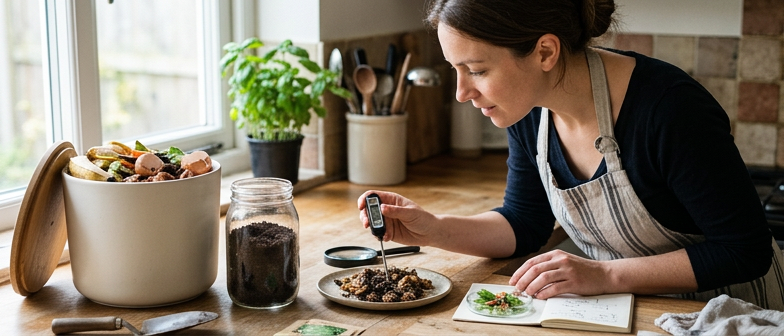
When you collect peels, coffee grounds, and other scraps, a small ecosystem begins working on them in your kitchen compost container. This is where the basic science of a household decomposition process appears. Microorganisms such as bacteria and fungi are the main workers, feeding on leftover food and breaking large organic molecules into simpler forms. As they digest these materials, they release heat, carbon dioxide, and water vapor, which is why an active pile can feel warm and gradually shrink. This simple kitchen compost science explains why food waste does not sit unchanged but turns into something that looks and smells more like soil.
For this food waste breakdown to happen efficiently, microbes need oxygen, moisture, and a reasonable mix of materials. Oxygen supports aerobic bacteria, which decompose scraps quickly and create fewer unpleasant odors than microbes that work without air. Moisture lets nutrients and microbes move through the pile, but it must be balanced. A bin that is too wet becomes compacted and low in oxygen, while one that is too dry slows biological activity. Mixing drier items like paper towels or shredded cardboard with wetter fruit and vegetable trimmings helps keep decomposition steady.
Temperature is another key driver in a household compost bin. As microbes break down food, they generate heat, and in a larger backyard bin this can raise the internal temperature above the surrounding air. Warmer conditions within a moderate range speed up bacteria and fungi and support a diverse community of decomposers. Even in a smaller indoor container, you may notice subtle warmth in the center, a sign of active microbial work. By giving microbes oxygen through occasional stirring, keeping the compost as damp as a wrung-out sponge, and chopping large chunks, you create conditions that turn everyday kitchen scraps into a stable, soil-like material over time.
| Composting Factor | Condition Description | Effect on Speed of Breakdown | Effect on Compost Quality |
|---|---|---|---|
| Oxygen | Loose, regularly stirred pile | High | More stable, fewer strong odors |
| Oxygen | Compacted, rarely mixed pile | Low | Patchy decay, more sour smells |
| Moisture | Damp like a wrung-out sponge | Medium to high | Even texture, earthy smell |
| Moisture | Very wet and soggy | Low | Slimy patches, stronger odors |
| Particle Size | Scraps chopped into small pieces | High | Finer, more uniform compost |
| Material Mix | Balanced wet scraps and dry absorbents | Medium to high | Crumbly, soil-like result |
Microbes, Invertebrates, and Other Hidden Helpers
A kitchen compost pile is a small, active ecosystem where microscopic organisms power the household decomposition process. Bacteria arrive first on food scraps, feeding on sugars and soft plant tissues and releasing heat. Fungi spread through tougher stems and peels, sending out fine threads that break down complex plant fibers. During backyard compost observation, warm spots and white fungal strands show these hidden helpers are recycling leftovers into simpler materials that soil life can use.
Once microbes have softened the food waste, larger creatures such as springtails, beetles, and composting worms move in. These invertebrates chew, shred, and mix the material, creating more surface area for bacteria and fungi and speeding up the breakdown of scraps. For anyone doing a beginner environmental study at home, watching a banana peel disappear under worms and insects reveals how animal life and microbes together turn kitchen waste into dark, crumbly compost.
What Happens to Food Scraps as They Break Down
When you add kitchen peelings and leftovers to a bin or backyard pile, you start a small household decomposition process. Microorganisms already living on the scraps and in the soil feed on fruit skins, vegetable ends, coffee grounds, and stale bread. At first you can still recognize each item, but inside the pile bacteria and fungi multiply, using oxygen and moisture to unlock the energy stored in the food. This is the same natural decay you see in forests, but here it is concentrated and guided in a simple home compost system.
As breakdown continues, the compost heats up and the pieces of food soften and lose their bright colors. Worms, insects, and tiny soil animals move in and chew the material into smaller fragments, giving microbes more surface to work on. A banana peel that looked almost whole in the first week turns leathery, then fragile, until it crumbles when you touch it. With regular backyard compost observation, you can watch once‑solid scraps gradually turn into a dark, crumbly mix that no longer looks or smells like food.
In the later stages, the pile cools and decomposition slows, but the material keeps changing in quieter ways. Microbes finish digesting easy sugars and starches, leaving behind more stable organic matter that behaves like young soil. Bits of eggshell or tough stems may still be visible, but most of the original food waste breakdown is complete, and the pile has become a uniform, earthy substance that shows how a simple household decomposition process can turn everyday scraps into a soil‑like resource.
Greens, Browns, and the Balance That Keeps Compost Stable
In the science of kitchen compost, stability comes from balancing moist, nitrogen rich "greens" with dry, carbon rich "browns." Greens include most fresh food scraps, such as vegetable peels and coffee grounds, which fuel the microbes that drive food waste breakdown. Browns, like shredded paper, dry leaves, and cardboard, provide structure and energy while soaking up extra moisture. When this mix leans too far toward greens, the household decomposition process can turn soggy and smelly; too many browns slow everything down. A simple daily sustainability habit is to cover each container of fresh scraps with a thin layer of dry material. This creates a steady environment for microbes, keeps odors low for backyard compost observation, and turns basic kitchen compost science basics into an easy, beginner friendly environmental study right at home.
From Compost to Soil: Simple Ways to Learn About Soil Health
When your kitchen scraps have finished turning into dark, crumbly compost, you are holding a simple soil science lesson. This finished material shows Kitchen Compost Science Basics in action: once-recognizable food waste turns into an earthy mix that smells like a forest floor. For anyone starting a beginner environmental study at home, it offers easy hands-on learning. Notice how mature compost clumps yet still falls apart, how it holds water without becoming sticky, and how it changes the feel and color of your garden soil when you mix it in.
Continue this simple soil learning by comparing a patch of soil with compost added to a similar patch without it. Over time, the amended soil often becomes easier to dig, less likely to form a hard crust, and better at holding gentle moisture while still draining after rain. Looking closely, you may see more small roots, bits of decayed plant material, and tiny soil organisms where compost was added. These signs show how the decomposition process from your kitchen supports an active underground community and links everyday composting habits to basic ideas about soil structure, water movement, and soil life.
Q&A
-
What are the basic science ideas behind kitchen composting?
Kitchen composting shows how microbes break food scraps into simpler substances, releasing heat, water vapor, and carbon dioxide while creating a darker, nutrient‑rich material that improves soil. -
How does the household decomposition process actually work in a small bin?
Bacteria and fungi living on peels and coffee grounds use oxygen and moisture to digest them, slowly turning recognizable leftovers into a uniform, crumbly mass that resembles soil rather than food. -
What simple things can I observe to learn about soil from finished compost?
You can feel how mature compost clumps yet falls apart, notice how it holds water without getting sticky, and see how it darkens and loosens garden soil when you mix it in. -
What is the difference between greens and browns in food‑waste breakdown?
Greens are moist, nitrogen‑rich materials like vegetable scraps, while browns are dry, carbon‑rich items like leaves or shredded paper; a balanced mix keeps the pile active without becoming soggy or slow. -
How can daily habits turn my compost bin into a beginner environmental study?
By regularly collecting scraps, adding a thin layer of dry material, and checking moisture, heat, and smell, you create a small, repeatable experiment that shows decomposition and nutrient cycling over time.