Why Kitchen Water Filtration Matters
In most homes, the kitchen tap is the main source of drinking and cooking water, so understanding basic kitchen water filtration helps you decide what you and your family consume. Public systems and private wells are managed to meet safety standards, yet water can still pick up substances from pipes, plumbing, or local conditions that affect taste, odor, or clarity. Any practical drinking water quality guide starts with the idea that filtration is usually designed to improve taste, smell, and appearance, and in some cases reduce specific contaminants found through testing, rather than promise water that is completely free of every possible impurity.
Household water filtration focuses on the water you use most directly, and the kitchen is often where that matters most. Countertop units, faucet-mounted filters, under-sink systems, and filtered pitchers pass water through materials that hold back certain particles or chemicals. These devices do not replace public utilities or proper well maintenance, but they can complement them when you want more control at the tap. By understanding what filtration can and cannot reasonably do, you can choose whether a simple pitcher, an under-sink system, or another setup is the right fit for your household without expecting it to solve every water issue.
Understanding Your Tap Water
Before choosing any kitchen water filtration, it helps to understand where your tap water comes from and how it is treated. Most homes receive water either from a public utility or from a private well. Public systems draw from rivers, lakes, or groundwater, then disinfect and treat the supply to meet drinking water standards. Private wells are managed by the homeowner, so testing and any needed treatment become part of a personal drinking water quality guide. Knowing whether your water is surface or groundwater, and whether it is municipally treated or from a well, gives context for what might still be present by the time it reaches your faucet.
These different sources and treatment steps directly influence decisions about household water filtration at the kitchen sink. City water may already be disinfected and controlled for many contaminants, but you might still want a filter to improve taste, reduce chlorine odor, or add a final barrier. Well owners often focus on minerals, sediment, or specific contaminants identified in lab tests. By combining information from your water utility report or well test results with your own priorities for taste, appearance, and safety, you can decide whether you need a simple pitcher filter, a faucet-mounted unit, or a more comprehensive under-sink system to manage your tap water in the kitchen.
| Household water situation | Typical concerns at the kitchen tap | Filtration focus | Example filter approaches |
|---|---|---|---|
| Municipal water from surface sources | Chlorine taste, mild odor, occasional cloudiness | Taste and odor polishing | Pitcher or faucet filter with activated carbon |
| Municipal water from groundwater | Mineral feel, possible metallic taste | Mineral management and flavor | Under-sink carbon filter or cartridge system |
| Shallow private well | Sediment, changing color, possible odor | Sediment and basic contaminant reduction | Whole-house sediment filter plus kitchen carbon unit |
| Deep private well | Minerals, specific lab-identified contaminants | Targeted contaminant reduction | Under-sink system with staged cartridges or reverse osmosis |
| Older plumbing in home | Uncertain pipe materials, fluctuating water quality | Additional safety margin at tap | Certified under-sink filter or dedicated drinking faucet system |
Basic Indicators of Drinking Water Quality
A basic drinking water quality guide for the kitchen starts with information already available about your local supply. Many communities provide annual water quality reports that summarize source water, treatment steps, and whether tested levels of common contaminants meet regulatory standards. Reviewing these reports and comparing them with your household water filtration setup helps you decide whether a simple pitcher or faucet unit is enough or if more advanced filtration might be needed.
Some households add certified laboratory testing or pay close attention at the sink to refine this baseline view. Lab tests can measure specific substances and are useful for private wells or when taste, odor, or color raise questions about quality. Noticing changes in smell, visible particles, or stains around fixtures can signal that your current kitchen filter deserves a closer look and that cartridges may need replacement.
Common Types of Kitchen Water Filters
In Kitchen Water Filtration Basics, most Household Water Filtration choices start with where and how the filter will be used. Kitchen filters are usually point-of-use systems that treat water at a single tap or appliance, and they are selected to address specific concerns about taste, odor, or certain contaminants. People often check local water reports or test well water, then choose among different water filter types that match their results and fit everyday use at the sink or countertop.
A very common option is the activated carbon filter, found in pitcher units, faucet-mounted devices, under-sink housings, and refrigerator cartridges. This porous material adsorbs a range of substances and is often used to reduce chlorine taste and odor, some organic chemicals, and certain disinfection byproducts, depending on how the product is designed and certified. For many households, this type of filtration offers a simple way to improve the flavor and smell of tap water for drinking and cooking without major plumbing changes.
More complex kitchen systems include reverse osmosis units and multi-stage under-sink filters that form part of a broader Household Water Filtration plan. Basic reverse osmosis setups push water through a semi-permeable membrane to reduce various dissolved substances, often combined with sediment pre-filters and carbon cartridges to handle particles and chemicals affecting taste. Every filter style has limits and maintenance needs, so checking what the system is certified to remove, how often cartridges and membranes must be replaced, and how it supports an overall drinking water quality guide helps you choose the right option for your kitchen.
How Activated Carbon Filters Work
An activated carbon filter is a common kitchen water filter type because it improves taste and reduces everyday contaminants. The carbon is processed to create many tiny pores and a large surface area. As tap water passes through, substances such as chlorine and some organic compounds are adsorbed onto the carbon, which helps cut odors and off flavors in drinking and cooking water.
In household water filtration, activated carbon appears in pitcher filters, faucet units, refrigerator filters, and under‑sink cartridges that focus on basic drinking water quality. These filters do not usually remove dissolved minerals, many microorganisms, or all chemicals, so they are often paired with other methods. Regular water filter replacement is essential, because a saturated carbon bed loses performance and can no longer treat kitchen water as intended.
Reverse Osmosis Basics for the Kitchen
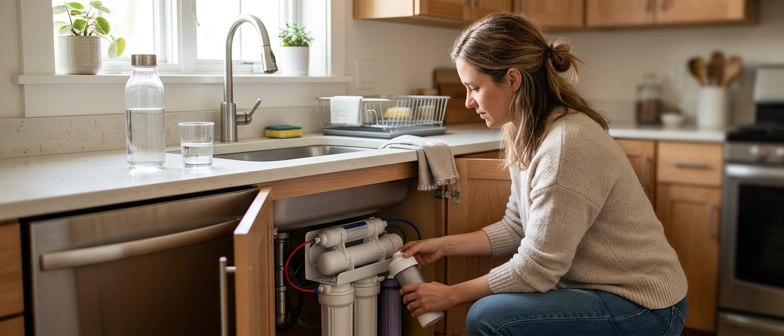
In kitchen water filtration basics, reverse osmosis is a type of household water filtration that uses a semi‑permeable membrane to reduce many dissolved substances in tap water. Under pressure, water is pushed through the membrane, which lets water molecules pass while holding back a wide range of dissolved solids. A typical under‑sink reverse osmosis system includes a sediment pre‑filter, an activated carbon filter for chlorine and some organic compounds, the membrane, and a small storage tank so treated water is ready at a dedicated drinking faucet.
Compared with other water filter types, reverse osmosis units need more space under the sink and generate wastewater that must be drained, which affects water use and plumbing. Because these systems remove many dissolved minerals, the water may taste flatter, and some units add slight remineralization. Installation normally uses the cold‑water line, a drain connection, and a separate faucet, so planning for space and access is important. As with any kitchen filtration setup, performance depends on regular water filter replacement for sediment, carbon, and membrane elements, following manufacturer guidance to maintain reliable drinking water quality.
Q&A
-
Why does kitchen water filtration matter for everyday cooking and drinking?
The kitchen tap is usually the main source of drinking and cooking water, so basic filtration can improve taste, smell, and clarity and help address specific issues found in local water reports or home testing. -
How can I understand my tap water before choosing a household filtration system?
Find out whether your water comes from a public utility or a private well, review any available water quality report, and consider a test for well water so you know which substances a filter should be designed to reduce. -
What are common types of kitchen water filters?
Typical options include filtered pitchers, faucet‑mounted units, under‑sink cartridges, and reverse osmosis systems, each installed at a single tap or appliance to address taste, odor, or selected contaminants. -
How do activated carbon filters improve drinking water quality?
Activated carbon has many tiny pores that adsorb chlorine and some organic compounds as water passes through, which helps cut common odors and off flavors from the kitchen tap. -
How often should I replace my kitchen water filter components?
Most filters have a recommended replacement schedule based on gallons used or time in service, so checking the manufacturer’s instructions and following them helps maintain performance and consistent water quality.