Enhancing the Retail Experience
Augmented reality (AR) is transforming the way we interact with products, making shopping more immersive and personalized. This technology is breaking down the barriers between in-store and online experiences, offering consumers a dynamic way to engage with brands and products.
Redefining Customer Engagement
The integration of AR in the retail sector provides users with interactive experiences that boost engagement significantly. For instance, customers can use their smartphones to "try on" makeup or accessories before purchasing, offering a virtual fitting room experience right from home. This capability is especially prominent in the fashion and beauty industries, where the ability to visualize products in real time enhances decision-making. Not only does this provide customers with confidence in their purchases, but it also reduces return rates. Consequently, businesses see improved conversion rates and stronger consumer loyalty. According to data, the use of in-app AR advertisements increases purchase intent by 40%, illustrating the compelling impact of AR-enhanced interactions.
Merging Online and Offline Shopping
One of the most transformative aspects of AR in retail is its ability to create a seamless blend between digital and physical shopping environments. Imagine being able to point your device at a piece of furniture and seeing how it looks in your home before purchasing. This feature bridges the gap between browsing and buying by providing customers with a more reliable understanding of product scale and spatial fit. As a result, consumers can make highly informed purchasing decisions without stepping into a store—an essential adaptation for busy lifestyles. For retailers, this means creating opportunities for increased sales and lowering the barriers that might prevent online purchases due to uncertainties about fit or compatibility.
Revolutionizing Navigation and Spatial Awareness
AR is not just about visual enhancements; it is about navigating and interacting with our environments in a more informed and intuitive manner. This is particularly true in the realm of spatial computing, where AR enhances our ability to understand and engage with physical spaces.
A New Approach to Navigation
Traditional maps are becoming a thing of the past as AR technology introduces a more interactive approach to navigation. Instead of following a flat GPS map, users now have the ability to see digital directions overlaid on the real world. For example, AR can project arrows and names of streets straight onto the sidewalks through a device's camera. This feature not only reduces the cognitive load when navigating unfamiliar areas but also provides a more immersive sense of directionality. As networks improve and the technology becomes more commonplace, such augmented navigation systems will likely become integral to everyday travel.
Enhancing Professional and Everyday Settings
The application of AR in navigation transcends beyond personal use and enters professional spheres where precise spatial awareness is crucial. In fields such as architecture or urban planning, AR can overlay proposed designs onto existing landscapes, providing stakeholders with a comprehensive visualization of projects before any physical changes occur. This enhanced spatial awareness supports better decision-making and minimizes the risks associated with complex developmental undertakings.
Transforming Training and Education through Interactive Manuals
One of the most practical advancements brought by AR is the development of interactive manuals that revolutionize how we learn and apply skills. Unlike traditional manuals, AR offers visual, hands-on interactions that significantly enhance comprehension and execution.
Visualizing Complex Processes
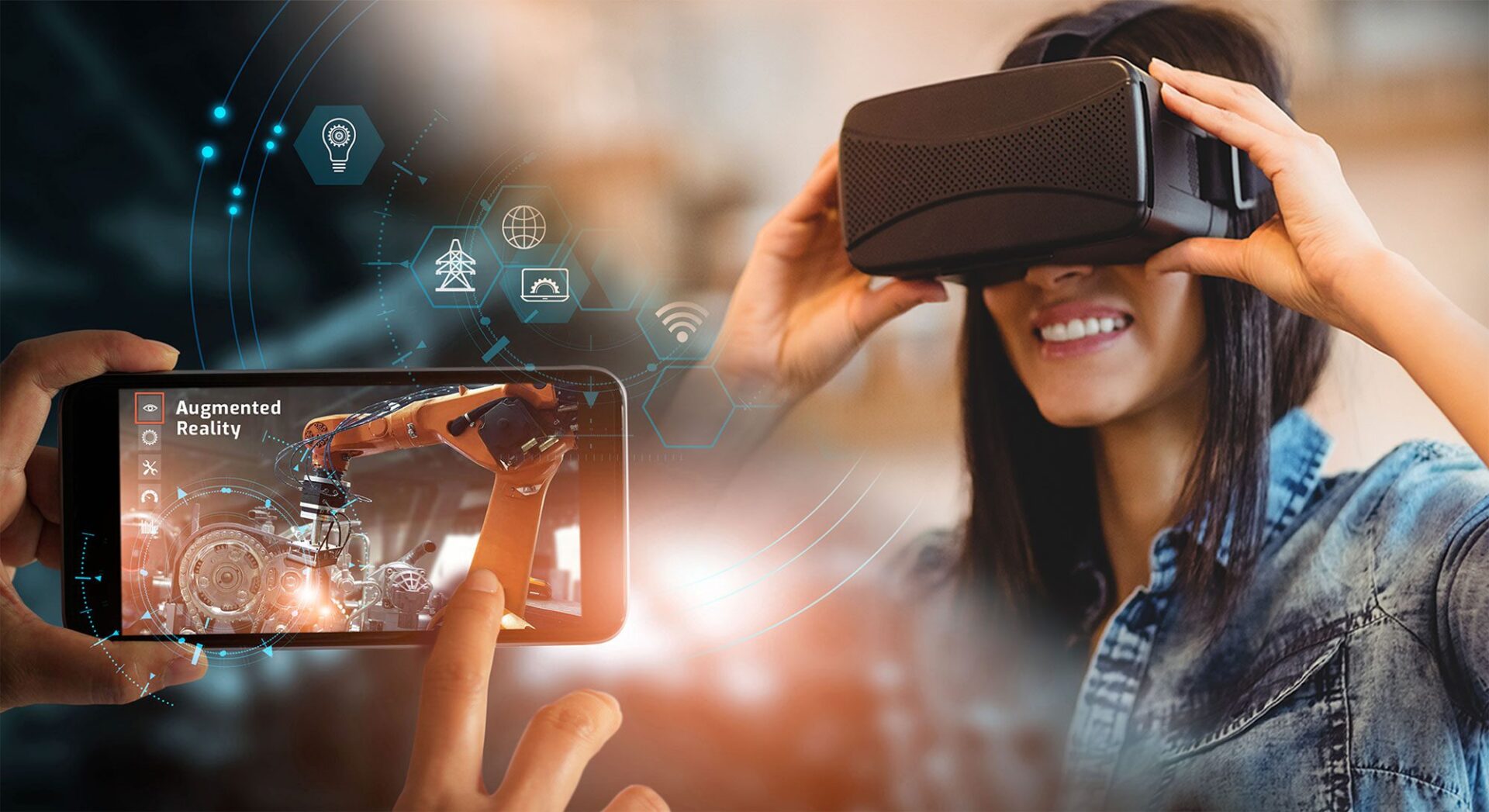
Imagine a technician repairing machinery with guidance displayed directly over the components involved. AR can provide step-by-step instructions that appear overlaid on the real object, highlighting parts and illustrating procedures dynamically. This method replaces abstract instruction with direct visual guidance, reducing misinterpretation and errors. The clarity offered by AR manuals makes them invaluable in fields requiring precision, such as manufacturing and engineering, where accuracy is critical for safety and efficiency.
Improving Education and Skill Development
In educational contexts, AR has the potential to transform how students interact with content. By exploring components of a complex system in 3D, learners can gain a deeper understanding of subject matter that is often limited when presented in two dimensions. For example, medical students can visualize anatomical structures in an immersive environment, making the intricate connections within the body more tangible. This approach not only aids retention but also prepares students for real-world applications by creating an engaging and interactive learning experience.
Bridging Worlds: The Interplay of Reality and Digital Information
As AR continues to evolve, its role in blending digital elements with physical environments presents new frontiers for innovation across various industries. The potential for augmented reality is vast, offering new paradigms for how we interact with the world.
Emerging Applications and Trends
The scope of AR extends beyond gaming and entertainment, entering fields such as healthcare, where real-time guidance and overlays enhance diagnostic and surgical procedures. Surgeons can receive critical information directly onto their field of view, increasing the accuracy and success of operations. Moreover, in education, AR enables students to engage with material in a more dynamic way, allowing them to see and interact with virtual representations of complex concepts. The versatility of AR applications continues to expand, driven by improvements in mobile AR technologies and spatial computing, with predictions of reaching over a billion users worldwide.
The Future Landscape of Augmented Interaction
The continued development and integration of AR technologies will gradually transform everyday life, making interactions more intuitive and enriching across various sectors. As the technology matures, more industries will discover innovative ways to leverage AR, resulting in new products, services, and ways of engaging with customers and the world. Augmented reality is not just a tool for enhancing perception; it is a gateway to a future where digital and physical realities coexist and complement each other harmoniously. The potential of AR to redefine our landscape is vast, promising a future where the possibilities for interaction and engagement are boundless.
Q&A
-
What are digital overlays, and how do they enhance mobile AR applications?
Digital overlays refer to the virtual elements superimposed onto the real world through a mobile device's camera. They enhance mobile AR applications by providing users with additional information and interactive elements that blend seamlessly with their physical environment, improving user engagement and experience. -
How is spatial computing utilized in interactive manuals?
Spatial computing in interactive manuals allows users to receive step-by-step instructions overlaid on real-world objects. This can enhance understanding and efficiency by providing precise, context-aware guidance for complex tasks, such as assembling machinery or repairing devices. -
In what ways can retail experiences be improved through mobile AR applications?
Retail experiences can be significantly enhanced by using mobile AR applications to offer virtual try-ons, personalized recommendations, and immersive product demonstrations. This technology enables customers to visualize how products will fit or look in their own space, leading to more informed purchasing decisions. -
How do navigation aids benefit from spatial computing technologies?
Navigation aids leveraging spatial computing can provide real-time, accurate guidance by integrating digital maps and directions with the physical environment. This enhances user experience by offering intuitive and context-aware navigation, whether indoors or outdoors, reducing the likelihood of getting lost. -
What role do digital overlays play in enhancing retail experiences?
Digital overlays in retail experiences provide customers with interactive content, such as price comparisons, product information, and promotional offers directly on their mobile devices. This enhances the shopping experience by making it more engaging and informative, helping customers make better purchase decisions.