Why a Used Car Maintenance Checklist Matters
A structured Used Car Maintenance Checklist turns vague intentions into a routine you can follow. When you buy a pre-owned vehicle, you inherit its history, including how it was serviced and driven. A simple written plan covering regular inspections, basic upkeep, and quick attention to small issues helps you spot wear early, understand what your car needs, and explain problems clearly to a mechanic. This organized approach forms the backbone of any reliable car ownership guide, especially when you are unsure what the previous owner actually maintained.
Treating maintenance as a checklist instead of a guess also supports safer, more predictable driving. By turning pre owned car care tips into habits, such as checking fluids, listening for new noises, and tracking mileage-based services, you lower the risk of avoidable breakdowns and keep the car performing as it should. Instead of reacting only when something fails, you follow a plan that fits your budget, driving style, and the vehicle’s age. The rest of this guide builds on that idea, showing how a consistent, realistic checklist can make owning a used car less stressful and more transparent over time.
Building a Practical Vehicle Inspection Routine
A practical vehicle inspection routine turns a general used car maintenance checklist into something you can actually follow. Instead of trying to check everything at once, divide tasks into quick visual checks you do before or after driving and deeper reviews you schedule on your calendar. This approach helps you notice changes over time, which matters with a pre-owned car that may already show wear. Treating this routine as part of a reliable car ownership guide, rather than a one-time chore, makes it more manageable and easier to keep up.
Daily or weekly walk-arounds should be simple and repeatable. As you approach the car, look for fresh fluid spots under the engine bay, confirm that all lights and indicators work, and make sure the windshield and mirrors are clean enough for safe driving. While loading passengers or luggage, glance at the tires for obvious damage or low pressure and listen for new noises when you start the engine. These quick checks take only a few minutes but give you early warnings about problems that could become more expensive if ignored.
Your monthly and annual schedule can go deeper and form the backbone of your used car maintenance checklist. Once a month, combine basic engine fluid checks, such as oil and coolant levels, with a closer look at wipers, tire tread and air pressure, and the condition of visible belts and hoses. Once or twice a year, set time aside for a more thorough inspection, either at home or with a professional, reviewing brakes, suspension, steering feel, and any dashboard warning lights. Writing these time-based checks into a simple calendar or notebook creates a structured vehicle inspection routine that supports safer driving and more predictable long-term ownership costs.
| Check Item | When to Inspect | How to Review | Priority if Issue Found |
|---|---|---|---|
| Fresh fluid spots under car | Daily or weekly | Quick ground glance before driving | High |
| Exterior lights and signals | Daily or weekly | Switch on and walk around | High |
| Windshield, mirrors, wipers | Daily or weekly | Visual clarity check | Medium |
| Tire tread and pressure | Monthly | Closer look and gauge or coin test | High |
| Visible belts and hoses | Monthly | Inspect for cracks or fraying | Medium |
| Brakes, suspension, steering feel | Yearly or as needed | Test drive and professional review | High |
What to Look For in Regular Walk-Around Checks
A quick walk-around is one of the most practical habits in any vehicle inspection routine, especially with a pre-owned car that may hide wear. As you move around the car, look for new dents, rust, cracked or cloudy lights, and loose trim. Make sure all doors, the trunk, and the fuel flap open and close cleanly, and that windows move smoothly without sticking or odd noises so you can spot small changes early.
On the same lap, focus on the tires and cabin, because both reveal useful pre-owned car care clues. Check that tread looks even, with no cords, bubbles, or deep cuts, then glance underneath for fresh spots that could mean leaks. Inside, confirm seatbelts retract properly, pedals feel solid, and floor mats sit flat so they cannot interfere with braking.
Basic Engine Fluid Checks for Used Cars
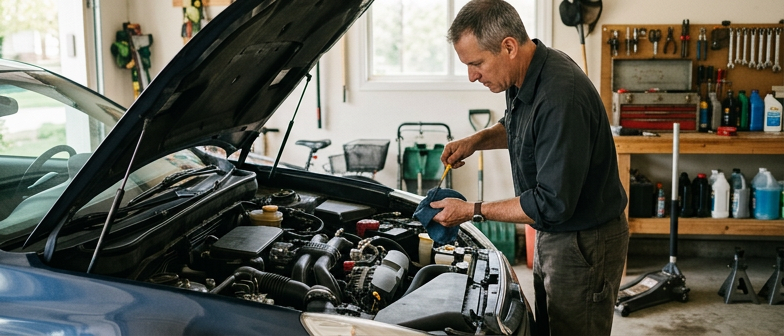
For any used car, basic engine fluid checks are a key part of a practical maintenance checklist. Park on level ground, switch off the engine, let it cool, and keep hands and clothing away from moving parts. Start with engine oil, since it protects the engine and supports long-term reliability. Pull out the dipstick, wipe it, reinsert it fully, then confirm the level sits between the minimum and maximum marks and that the oil is not extremely dark or gritty. If it is low, add the grade specified in the owner’s manual in small amounts, avoiding overfilling. Metal flakes, a burnt smell, or sudden changes in oil use are warning signs that call for a professional inspection.
Coolant, power steering fluid, and brake fluid are just as important in any routine vehicle inspection. Use the markings on the translucent coolant reservoir and never open the cap when the engine is hot. Power steering fluid reservoirs have hot and cold marks; heavy steering, low fluid, or visible leaks mean you should schedule workshop time rather than just topping up. Brake fluid should sit near the maximum line and look clean instead of very dark. Because brakes are a primary safety system, any sudden drop in fluid, leaks, or dashboard warnings mean you should stop driving and let a qualified technician handle repairs.
Windshield washer and transmission fluid are easier driveway checks that round out basic pre-owned car care tips. Keeping the washer tank topped with proper cleaning solution supports clear visibility and safe driving. Automatic transmission fluid checks vary by design, and some cars are sealed or have strict procedures, so you may be limited to watching for leaks at home and leaving detailed checks to a workshop. In general, owners can safely inspect levels, top up with the correct products, and watch for unusual smells, colors, or rapid changes, while work on pressurized systems, brake bleeding, or anything under the vehicle is best left to professionals as part of a reliable car ownership guide.
Warning Signs in Fluid Levels and Leaks
As part of any reliable car ownership routine, unusual changes in fluid levels or visible leaks are early clues that your used car may need professional attention. When you carry out basic engine fluid checks, look for oil that turns very dark and gritty soon after a change, coolant that appears rusty, milky, or has debris, or transmission fluid that smells burnt or looks brown instead of clear red. Rapid drops in any reservoir, warning lights on the dashboard related to oil pressure or engine temperature, or a sweet, burnt, or fuel-like smell after driving are all signs that a qualified mechanic should investigate before a minor issue affects safety or causes more costly damage.
Tires, Brakes and Everyday Safety Checks
For any used car, a simple tire and brake routine is a core part of a reliable car ownership guide. Park on level ground and inspect each tire for cuts, bulges, embedded objects and uneven tread wear, which can signal alignment, suspension or inflation issues that need professional attention. Use a tread depth gauge or a basic coin test recommended by local road safety agencies to confirm tread is safely above the legal minimum, especially before long trips or wet-weather driving.
Check tire pressures when the tires are cold, using the numbers on the driver-side door jamb or in the owner’s manual rather than the sidewall. Underinflated tires increase stopping distance and outer-edge wear, while overinflated tires reduce grip and comfort. Do not forget the spare if your car has one, as a flat or badly aged spare will not help in an emergency. Building these steps into your regular vehicle inspection routine supports better fuel economy and keeps your used car predictable in everyday driving.
Basic brake observations complete a practical tire and brake review for long-term ownership. With the engine off, press the brake pedal and make sure it feels firm and does not sink to the floor. While driving, listen for grinding, squealing or scraping when you brake, and notice any pulling to one side, vibration through the steering wheel or a burning smell after stopping. These signs mean it is time for a qualified technician to inspect pads, discs and brake fluid so your pre-owned car stays safe on the road.
Q&A
-
Why is a written used car maintenance checklist so important for a pre-owned car?
With a pre-owned car you inherit unknown driving and service habits. A written checklist makes your vehicle inspection routine consistent, helps you spot wear early, log what was done, and describe issues clearly to a mechanic. -
How can I turn my inspection routine into a reliable car ownership habit?
Split it into quick walk-arounds you repeat often and deeper checks you schedule on a calendar. Keeping both short and predictable makes them easier to stick to and helps you notice changes over time. -
What should I look for in a simple exterior walk-around?
Look for new dents, rust, cracked or cloudy lights, loose trim, and damaged glass. Open and close each door, trunk, and fuel flap, and confirm windows move smoothly without sticking, grinding, or unusual noises. -
What basic engine fluid checks matter most on a used car?
On level ground with a cool engine, confirm oil, coolant, and brake fluid sit between their marks and look clean. Very dark, gritty, burnt-smelling, or milky fluid, or sudden drops in level, call for a mechanic. -
How often should I review tires and brakes for everyday and seasonal safety?
Glance at your tires weekly for cuts, bulges, and low pressure, and check tread depth every few months or before seasonal trips. Pulling, vibration, grinding, or squealing when braking means the brakes need prompt inspection.