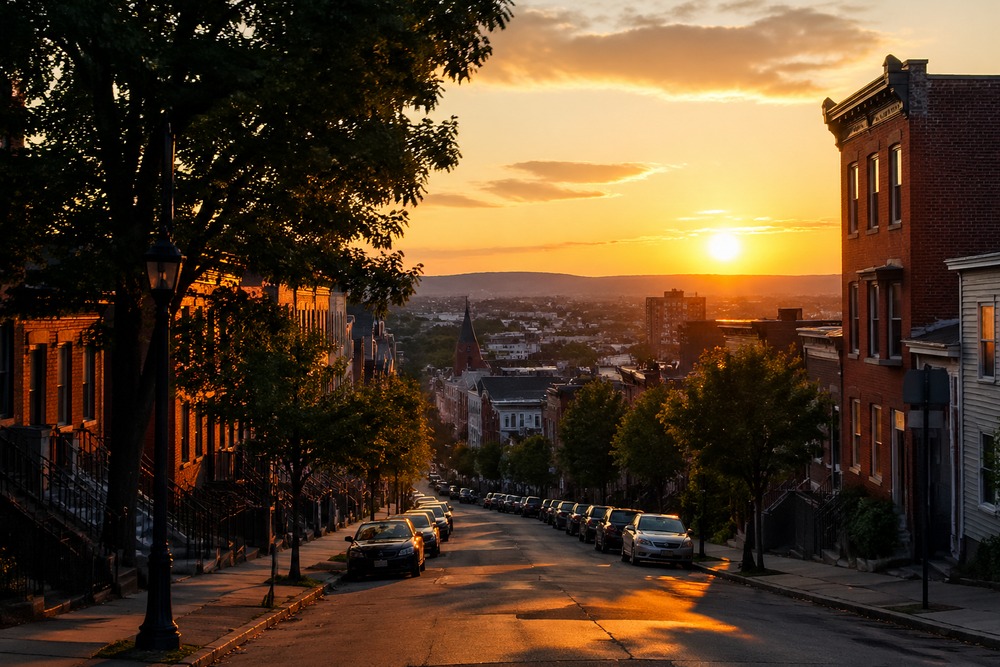
Why City Heat Lasts Into the Evening
Many people notice that built-up neighborhoods can stay uncomfortable long after daylight softens. The Urban Heat Island Effect helps explain why. Dense areas absorb warmth during the day and release it slowly after sunset, especially when dark surfaces, limited shade, and restricted airflow work together. The result is not just a hotter afternoon but a longer cooling period that changes how streets, homes, and public spaces feel.
This pattern is easy to misunderstand because it does not come from one source alone. Paved Surface Heat, building materials, and the spacing between structures all shape the local experience. Two areas under the same weather system can still feel different because one stores and traps more warmth than the other. Once people understand that point, the problem becomes less mysterious and more connected to ordinary design choices.
How Materials Store and Release Warmth
Surfaces matter because they control how strongly sunlight is absorbed and how slowly it is given back. Dark pavement, dense walls, and low-shade rooftops tend to hold warmth in ways that are easy to feel at pedestrian level. Reflective Roof Materials are often discussed in planning conversations because they can shift this balance by lowering how much heat a building takes in during bright hours.
That does not mean one material solves everything. Roof decisions interact with wall color, surrounding shade, and the amount of open sky between buildings. A block lined with hard surfaces can continue radiating warmth even if one structure changes its roof. The most realistic view is cumulative. Each surface contributes part of the thermal story, and neighborhoods become more comfortable when several of those parts improve together.
| Urban Element | Common Heat Behavior | Comfort Implication |
|---|---|---|
| Dark paved ground | Stores warmth strongly | Can keep walking areas warmer after sunset |
| Shaded planting zones | Buffers direct sun exposure | Supports cooler perceived conditions |
| Reflective roof surfaces | Limits heat absorption | Can ease indoor heat buildup |
| Open wind paths | Improves local air movement | Helps warmth disperse more naturally |
Why Trees Do More Than Create Shade
Tree Canopy Cooling is often reduced to the simple idea of blocking sunlight, yet its value is broader. Shade Planning Basics matter because shaded sidewalks, walls, and parked cars avoid taking in as much direct heat during the day. At the same time, planted areas change how a street feels by softening glare and making outdoor time less physically demanding.
Not every tree placement has the same effect. A canopy that shades a sitting area may help people pause more comfortably, while one that protects a facade can influence indoor comfort indirectly. The wider lesson is that shade is most useful when it meets actual patterns of use. Good design follows movement. It protects the path, bench, window, or play area that receives the most exposure rather than treating greenery as a decorative afterthought.
Airflow Changes the Way Warmth Is Experienced
Neighborhood Air Flow can be overlooked because it is less visible than pavement or roofs, but people feel it immediately. When wind paths are blocked by tightly arranged structures or enclosed surfaces, stored heat lingers more heavily at street level. Even modest breezes can make an area feel more breathable when design leaves room for air to move across open corridors.
This is one reason some compact districts feel stuffier than nearby areas with similar sunshine. The issue is not only heat storage but also heat release. If warm air cannot move away efficiently, evenings remain sluggish and buildings cool more slowly. Urban planning that respects airflow does not need theatrical gestures. Sometimes the key improvement is preserving openness where movement already wants to happen.
What This Means for Everyday Indoor Comfort
People often encounter the Urban Heat Island Effect first through daily routines rather than planning theory. A home that stays stuffy after sunset, a bedroom wall that seems slow to cool, or a neighborhood walk that feels heavier than expected can all reflect local heat storage. Summer Indoor Comfort depends partly on what happens inside the home, but it also depends on the materials and layout just outside it.
This is why localized solutions matter. Curtains, ventilation timing, and shade from nearby planting can all help, yet their impact is stronger when the surrounding environment is also working in the right direction. A cooler neighborhood is not produced by one gadget or one heroic intervention. It grows from a series of practical choices that reduce stored heat, improve shading, and respect natural air movement.
Design Choices Add Up Over Time
The most useful way to think about urban heat is as an accumulated condition. No single sidewalk explains a hot evening, and no single tree fully corrects it. But when reflective surfaces, planted shade, open airflow, and thoughtful placement come together, the atmosphere changes in a meaningful way. Streets become more usable, buildings release heat more gently, and people recover comfort sooner after sunset.
That perspective also keeps the topic grounded. The conversation is not only about climate terminology. It is about the everyday relationship between design and physical ease. Once that relationship becomes visible, city heat stops feeling random and starts looking like something people can respond to intelligently.
Common Questions About Warm Neighborhoods
Why can one street feel hotter than another nearby?
Different materials, tree cover, shade patterns, and airflow can change how warmth is absorbed and released, even within a short distance.
Do trees only help during the day?
No. By reducing how much heat surfaces take in earlier, they can also influence how warm an area remains later in the evening.
Are roofs more important than pavement?
Both matter, but they affect comfort differently. Roof choices influence building heat gain, while pavement strongly shapes how outdoor walking areas feel.
Why does airflow matter if the weather is already hot?
Moving air helps warmth disperse and changes how people experience outdoor conditions. Stagnant spaces often feel heavier and slower to cool.
Can small local changes really make a difference?
Yes. Local comfort improves when many modest choices work together, especially around shade, materials, and the paths air takes through a neighborhood.