Why Car Suspension Matters
In Car Suspension Basics, the suspension is the network of springs, dampers, links, and joints that connects the vehicle body to its wheels. It supports the car’s weight, helps keep the tires in steady contact with the road, and controls how the body moves when you accelerate, brake, or turn. Many modern cars use some form of independent suspension, where each wheel can move up and down with limited influence on the others. This layout helps the vehicle follow uneven pavement more closely and reduces sudden body motions when a single wheel hits a bump or pothole.
Suspension matters because it influences comfort, handling, and aspects of safety at the same time. By absorbing road impacts, it reduces vibration and harshness for passengers and limits how much the body leans, dives, or squats in corners and during sudden maneuvers. A well‑maintained suspension helps the tires maintain grip, supporting predictable steering and consistent braking, although it cannot remove the limits set by tire traction, road conditions, or driver behavior. Understanding these basics helps drivers see that suspension is not just about a smooth ride but also about how reliably the car responds when driving conditions change.
Key Suspension Components
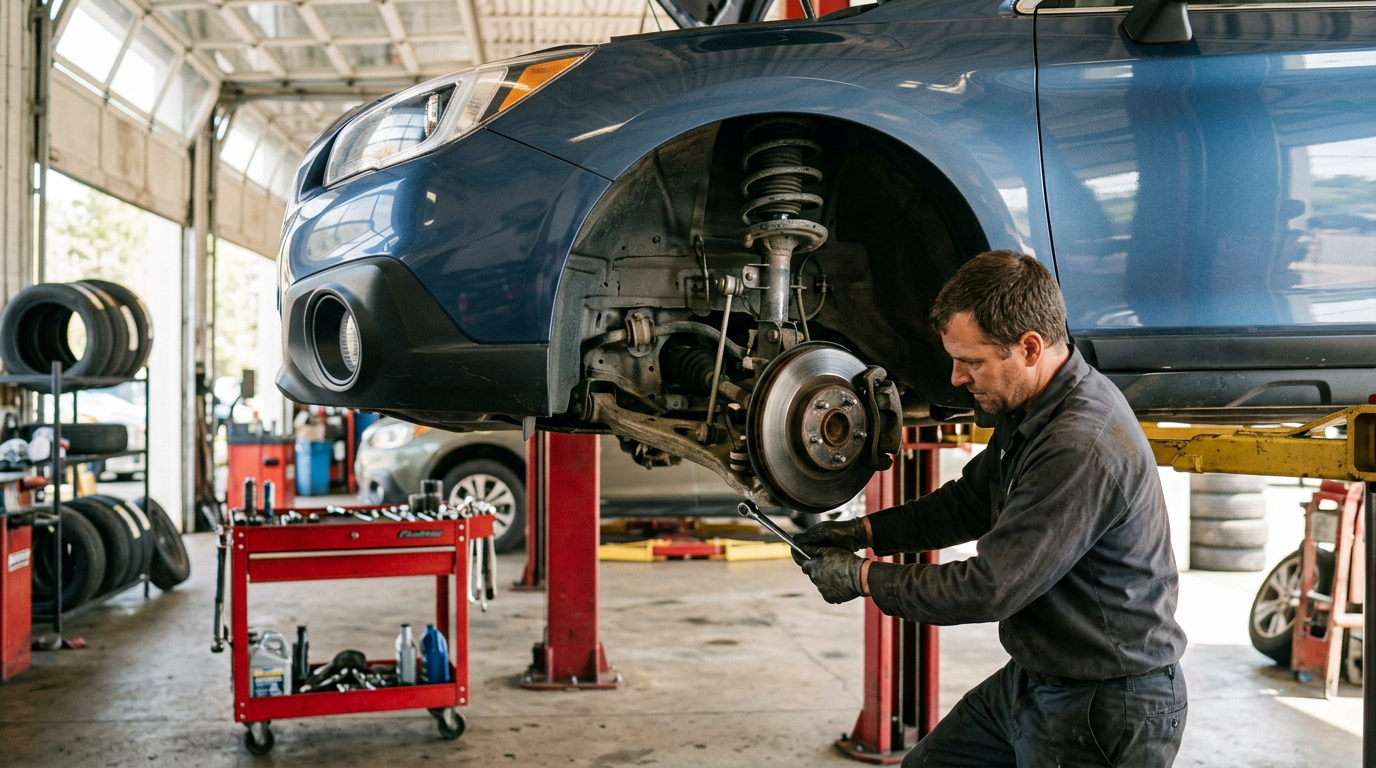
In basic passenger cars, the suspension system is a group of parts that keeps the tires in contact with the road while limiting how much bumps and body motions reach the cabin. Springs are the main load bearing components: coil springs are most common, though some vehicles use leaf springs or torsion bars. Their role is to support the vehicle’s weight and allow controlled vertical movement instead of transmitting every road irregularity directly to the structure. On their own, however, springs would let the body bounce repeatedly after a bump, which feels unstable and can make the vehicle harder to control.
Shock absorbers and suspension struts limit this motion by turning the springs’ energy into heat inside a fluid filled housing, which reduces bouncing and helps keep the tires planted. A strut combines a shock absorber with a structural housing that also locates the wheel, so it is both a damping device and a load carrying part of the suspension. Around these pieces are smaller components such as suspension bushings, which are flexible mounts made of rubber or similar materials that isolate vibration and allow controlled movement at joints. Together, these elements form the core of car suspension basics, but knowing their function is different from knowing how to repair them, which generally requires suitable tools, training, and attention to safety.
| Component | Primary Function | Typical Location | Effect on Ride Comfort | Effect on Handling Stability |
|---|---|---|---|---|
| Car Springs | Support weight and allow vertical wheel travel | At each wheel between body and suspension arm or axle | Medium to high cushioning of bumps | Medium; can feel floaty without damping |
| Shock Absorbers | Dampen spring motion and control rebound | Near each wheel, mounted between body and suspension links | Increase smoothness over repeated bumps | High; reduce body bounce after bumps |
| Suspension Struts | Combine damping with structural wheel support | Common at front on many passenger cars | Balanced firmness and comfort | High; strongly influences steering feel |
Car Springs and Dampers
Springs and shock absorbers are the core of a car’s suspension but they do different jobs. Springs support the vehicle’s weight and let the wheels move over bumps, storing and releasing energy like a flexible cushion. Shock absorbers, often combined with suspension struts, slow this motion so the springs compress and rebound in a controlled way instead of bouncing repeatedly. This balance between flexibility and damping shapes ride comfort, body movement during braking and cornering, and how consistently the tires stay in contact with the road. When springs or dampers are worn, the car may bounce several times after a bump, feel unstable, or pitch forward noticeably under braking, which is a sign to arrange a professional suspension inspection rather than attempt a do it yourself repair.
Independent Suspension and Other Layouts
In basic suspension design, an independent layout lets each wheel on an axle move up and down without directly forcing the opposite wheel to copy that motion. This arrangement, common on many passenger cars, helps the tires follow uneven roads more closely, which can improve grip, steering precision, and ride comfort. A solid axle instead ties both wheels together with a rigid beam, so a bump at one wheel tends to tilt or shift the other side. Semi‑independent layouts, such as torsion beams, connect the wheels but still allow some relative movement, trading some refinement for simplicity and cost.
Independent arrangements are usually combined with springs, shock absorbers, or suspension struts that are tuned at each wheel to manage body roll, braking stability, and steering response. Solid and semi‑independent axles can be sturdy and space‑efficient, which suits heavy loads or rough use, but they often send more noise and vibration into the cabin and may react less accurately to quick changes in direction. For most drivers, knowing which suspension layout a vehicle uses is mainly about understanding these trade‑offs. If there are concerns such as new noises, uneven tire wear, or a clear change in ride quality, a qualified technician should inspect the system using appropriate tools and the manufacturer’s guidance.
Suspension Bushings and Ride Quality
Suspension bushings are rubber or synthetic cushions fitted between metal parts such as control arms, sway bars and subframes. In basic suspension design they isolate noise, vibration and harshness so bumps feel more muted in the cabin. By allowing limited, controlled movement, bushings help the suspension move smoothly while keeping components aligned, which supports stable, predictable steering without sending every impact straight into the vehicle body.
Everyday Signs and Limits of Your Suspension
In daily driving, suspension problems usually appear as changes in comfort and control rather than obvious broken parts. After a speed bump, the car may keep bouncing instead of settling quickly, suggesting worn shock absorbers or struts. The vehicle can nose-dive more under braking, lean more in corners, or feel like it floats or wanders at higher speeds. Uneven tire wear, new clunks over rough roads, or a steering wheel that vibrates on bumps are further hints that a professional suspension inspection may be needed. These symptoms do not identify a single failed part, but they signal that the system deserves attention.
It also helps to know the limits of a healthy suspension. Even when everything is working, it cannot erase potholes, remove all body roll, or guarantee stable handling in every emergency; it only manages forces within its design, tire grip, and road conditions. Shock absorbers and related parts wear gradually, so small changes can build up and be hard to notice. Simple checks at home, such as looking for fluid on a strut housing or a corner that sags, are useful but limited and do not replace periodic inspection by a qualified technician. For safety, work that involves lifting the car or handling springs is better left to trained professionals.
Q&A
-
What are the basics of a car suspension system?
It is the collection of springs, dampers, links, and bushings that connects the body to the wheels, supports weight, manages body motion, and helps the tires stay in contact with the road. -
How do car springs affect ride comfort?
Springs carry the vehicle’s weight and let each wheel move vertically over bumps, reducing how sharply road impacts are transmitted to the body, but they need dampers to prevent ongoing bouncing. -
What do shock absorbers and suspension struts actually do?
They slow the spring’s motion, turning rapid movement into controlled heat in the fluid inside the damper, which stabilizes the body when you brake, corner, or hit bumps. -
Why is independent suspension common on modern cars?
Because each wheel can move with less effect on the opposite side, it usually improves grip and comfort on uneven pavement compared with a solid axle, though design details vary. -
What are suspension bushings and when should I seek an inspection?
Bushings are rubber or synthetic cushions between metal parts that cut noise and vibration. New clunks, extra body roll, or persistent bouncing are signs to book a professional suspension inspection.