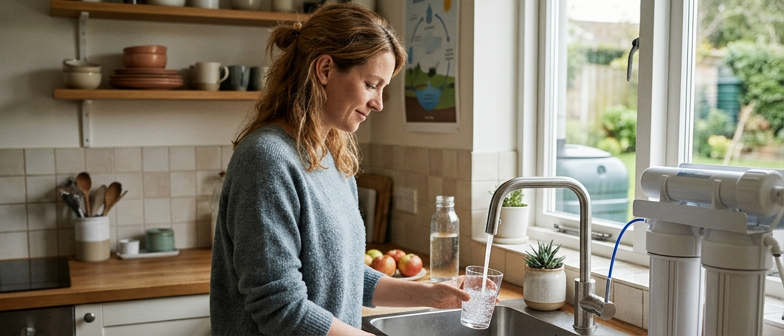
What the Household Water Cycle Really Means
When people imagine the water cycle, they often picture clouds, rain, and rivers, but there is also a quieter cycle happening inside every home. Household water cycle basics describe how water enters your home, how you use it, and where it goes after it disappears down the drain. Tap water arrives through pipes from public supplies or private wells, moves through showers, sinks, toilets, and appliances, and then flows out again to sewers or septic systems to be treated and released. This domestic loop fits inside the global cycle, linking everyday routines with the same water that evaporates from oceans, forms clouds, and falls back as rain or snow.
Seeing your home as part of this larger natural system turns simple environmental learning into something practical. Every time you run a bath, wash dishes, or water the garden, you borrow a small share of Earth’s limited freshwater before it re-enters rivers, groundwater, or the atmosphere. Knowing where household water comes from and how it returns to the environment makes it easier to follow local conservation advice, protect plumbing and fixtures, and support clean water in your community. Understanding your own domestic water cycle is less about memorizing terms and more about noticing how small, routine choices connect to the planet’s continuous movement of water.
From Sky to Tap to Drain
In the big picture of the household water cycle, the water coming from your tap once floated above you in the air. Heat from the sun drives evaporation, lifting liquid water from oceans, lakes, soil, and plants into the atmosphere as invisible vapor. As this humid air rises and cools, condensation turns the vapor into tiny droplets that form clouds. This basic science of evaporation and condensation links everyday weather to the wider movement of water around the planet and explains how home water supplies fit into the global system.
When droplets in clouds grow large and heavy enough, they fall as rain or snow. This simple rainwater science explains how some water soaks into the ground and feeds aquifers, some runs off into streams and reservoirs, and some is stored in snow and ice before melting. Public water systems and private wells tap these natural stores, clean the water, and distribute it to homes, so turning on a faucet is the end of a journey that began with clouds and storms shaped by regional climate.
Once water reaches your home, it becomes part of a smaller household loop. You use it for drinking, cooking, bathing, and cleaning, and then it flows down drains and toilets into sewers or septic systems. From there it is treated again and released back into rivers, lakes, or the ground, ready to rejoin the wider hydrologic cycle. Seeing these weather and water links makes it easier to understand how everyday home use connects to a much larger, constantly moving system of water on Earth.
| Stage in water path | Main process | Where it happens | Connection to home use |
|---|---|---|---|
| Evaporation | Liquid turns to vapor | Oceans, lakes, soil, plants | Supplies moisture that will become future tap water |
| Condensation | Vapor forms droplets | Cooler upper air, clouds | Builds clouds that can later feed water sources |
| Precipitation | Droplets or ice fall | Sky to land and water bodies | Refills rivers, reservoirs, and groundwater stores |
| Collection and treatment | Water stored and cleaned | Aquifers, reservoirs, treatment plants | Provides safe water delivered to household taps |
| Household use | Water used then drained | Sinks, showers, toilets, appliances | Creates wastewater that leaves the home system |
| Return to environment | Treated and released | Rivers, lakes, soil, groundwater | Joins the wider hydrologic cycle for reuse |
Evaporation, Condensation, and Rain in Everyday Terms
You can see evaporation and condensation in simple moments at home, such as a kettle boiling or a hot shower steaming up a mirror. When water is heated, its tiny particles move faster and some escape into the air as invisible water vapour; this is evaporation. As that moist air cools, the vapour slows down and sticks back together into tiny liquid droplets, which is condensation. In the wider environment this everyday science explains how clouds form, how rain develops, and how the movement of water and the weather are closely linked. Warm sunshine lifts water from oceans, lakes, and even damp garden soil, while cooler air higher in the sky turns that vapour into clouds that can grow heavy enough to fall as rain, a basic way to understand the rainwater part of the water cycle.
How Weather Shapes Your Home Water Supply
Weather patterns quietly control many parts of the household water cycle, from the amount of rain that soaks into the ground to the snow that feeds rivers and reservoirs months later. When storms are frequent and steady, they help refill lakes, streams, and underground aquifers that public systems and private wells rely on. Long dry spells, heat waves, or shifting seasonal winds can reduce these natural stores, so the water that finally reaches your tap has already passed through a chain of weather-driven events that begin in the atmosphere and end in your home.
Understanding Daily Water Use at Home
To understand the basics of how water moves through a household, it helps to start with your own daily routine. Every shower, toilet flush, load of laundry, and run of the dishwasher is part of a simple home water cycle, where treated water enters through pipes, is used, and then leaves as wastewater. Paying attention to when and why you turn on a tap builds everyday awareness of water use. You might notice, for example, that morning and evening are the busiest times, or that some habits, such as running the tap while brushing your teeth, add up over the day even though each moment seems small on its own.
This kind of daily water use awareness is a first step in simple environmental learning at home. When you see how your personal choices fit into the broader household water cycle basics, it becomes easier to spot patterns and small changes you can make without disrupting your routine. You might time your showers once, watch how full the sink is when you wash dishes, or observe how quickly you reach for the washing machine. These observations do not require special tools or technical knowledge; they simply invite you to look closely at how water supports cooking, cleaning, comfort, and hygiene, and to recognise that every litre used indoors eventually connects back to local rivers, treatment plants, and the wider environment.
Where Water Is Used Most in a Typical Home
Understanding where water is used most in a typical home is the first step toward better daily water use awareness. Indoors, toilets, showers, and baths usually account for the largest share, followed by washing machines, faucets in kitchens and bathrooms, and smaller uses like dishwashers or handwashing. Outdoors, garden irrigation, lawn sprinklers, and topping up pools or washing cars can quickly add to total consumption, especially in warm or dry weather. Seeing how these everyday activities connect to the broader household water cycle makes it easier to spot waste, such as long showers, half-full laundry loads, or overwatering plants, and to adopt practical home water conservation tips like short showers, efficient fixtures, and climate-appropriate landscaping.
Q&A
-
What do people mean by the household water cycle?
It describes how water enters a home from a public supply or well, moves through taps, toilets, and appliances, and then leaves as wastewater to be treated and returned to the wider environment. -
How are evaporation and condensation connected to the water from my tap?
Sunlight causes water to evaporate into vapour, which cools and condenses into clouds. Rain or snow from those clouds refills rivers, lakes, and aquifers that many water systems use as sources. -
Can you explain rainwater in simple scientific terms?
Rain forms when cooled water vapour in clouds condenses into droplets that grow heavy enough to fall. That rain can soak into soil, feed streams, or be collected in reservoirs that support household supplies. -
How does daily water use awareness help with conservation at home?
Noticing when and where you use the most water makes it easier to shorten showers, fix leaks, run full laundry loads, and adjust habits that quietly increase your overall use. -
What are some easy home water conservation tips for everyday life?
Use efficient showerheads and toilets, turn off taps while brushing teeth, water gardens in the cool parts of the day, choose plants that match your climate, and check regularly for dripping fixtures.